How Were Shantytowns Soup Kitchens And

Shantytowns Dust Bowl Soup Kicthens Breadlines Great Depression
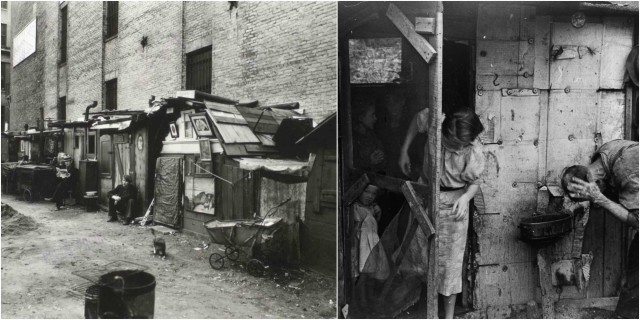
Life In Hooverville Photos Of Inside The Shanty Towns Of The Great Depression

Shantytown Near Penn Station The Brady Stewart Collection Pittsburgh City Shanty Town Pennsylvania History

The Penn Incline Near Shantytown The Brady Stewart Collection Pittsburgh City Shanty Town Pittsburgh Pa

Shantytown Shanty Town Slums Ghetto

1933 A Hooverville Shantytown In Central Park New York Arquitectura
The level of homeless citizens significantly increased during the 1930 s as some people lost everything.
How were shantytowns soup kitchens and. People also lived in shantytowns called hoovervilles which consisted of little make shift homes made by homeless people with scraps of materials. They were symbols of community strength and perseverance with accounts today of some serving literally hundreds to thousands of people. Hobos were a common sight as they were attracted to urban settlements usually near soup kitchens.
Many people were evicted from theier homes and ended up in the streets. Some slept in parks or sewer pipes wrapping themselves in newspapers to fend off the cold. How were shantytowns soup kitchens and bread lines a response to the depression.
Breadlines and soap kitchens were established as charitable organizations. They were able to provide food and shelter from shacks and charitable. How successful were they.
In order to aid many of the poverty stricken people who could not afford food soup kitchens opened up nationwide to supply the poor with food. Some slept in parks or sewer pipes wrapping themselves in newspapers to fend off the cold. The great depression took place in the us in early 1930 s after black tuesday.
Answers 1 arihaan today 16 38. To an extent these were successful but they did nothing to save the economy. Formed on the outskirts of cities shanty towns were dense little towns made up of tents and small shacks put by homeless people as shelter.
Many people were evicted from theier homes and ended up in the streets. The depression made it so noone had enough money for food so in result the amount of shantytowns soup kitchens and bread lines increased greatly. During that period people were unable to buy enough food.

Lobster Bisque At The Soup Kitchen How A Charity Is Redistributing Food Lobster Bisque Soup Kitchen Lobster Bisque Soup

Pin On Awesome Photography

Pin On Everything Around Us

Pin By Miky Miles On New Deal In 2020 Denver History Colorado Native

The Brazilian Gap A Woman Locks Up Her Home Just Below The Scene Of A Fire At Paraisopolis Shantytown Sao Paulo Brazil Photograph Shanty Town Slums World

Pin On Pittsburgh My Home

Old Steel Mill In Pittsburgh Some Of My Family History Pennsylvania History Steel Mill Pittsburg

Https Www Facebook Com History Photos A 480647736183 258349 8429246183 10153008575836184 Type 3 Stock Market Stock Market Crash History

1910 July Goose Creek Houses On The Water Jamaica Bay Long Island New York Shorpy Historical Photos Water House Colorized Photos

Pin On Pittsburgh History

Shanty Town Street Google Search Shanty Town Shanty Chic House Styles

First Pittsburgh Marathon 1985 With Images Pittsburgh Allegheny County Pittsburgh Pa

The Way We Were Pittsburgh Magazine Pennsylvania History Pittsburgh
